
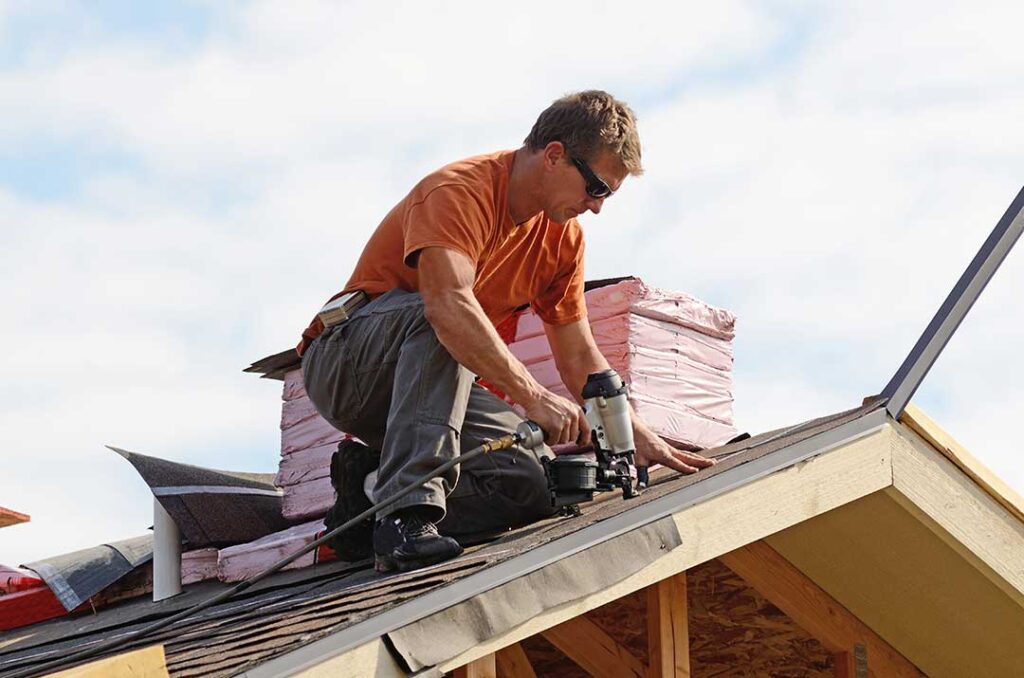
Which roofing materials are considered the most durable?
The longest-lasting roofing materials are generally slate, copper, standing-seam metal, and clay or concrete tile. Their durability comes from resistance to moisture, sunlight, insects, fire, and repeated weather exposure.
For many homes, however, the most durable material is not automatically the best choice. Roof structure, slope, snow loading, ice formation, ventilation, installation quality, and maintenance all affect how long a roof performs. A less expensive material installed correctly may outlast a premium material installed on an unsuitable roof.
In Potsdam, NY, roofing materials must cope with freezing temperatures, snow, wind, spring moisture, summer sun, and repeated freeze-thaw cycles. A practical choice should resist those conditions while remaining compatible with the home’s structure and roof design.
How long can durable roofing materials last?
Approximate service lives vary widely:
- Slate: 75 to more than 100 years
- Copper: 60 to more than 100 years
- Standing-seam metal: 40 to 70 years
- Clay or concrete tile: 50 to 100 years
- Architectural asphalt shingles: roughly 25 to 40 years
- Wood shingles or shakes: about 20 to 40 years, depending heavily on maintenance and moisture exposure
These are broad ranges, not guarantees. A roof may fail earlier because of poor ventilation, inadequate flashing, fastener problems, ice dams, structural movement, or repeated damage from falling branches. Conversely, careful design and maintenance can extend useful service life.
The covering is only one part of the roof. The deck, underlayment, flashing, ventilation, insulation, drainage, and fasteners all influence durability.
Is slate the most durable roofing material?
Slate is among the most durable roofing materials available. Natural slate is a dense stone that resists rot, insects, fire, and ultraviolet damage. Properly selected slate can remain serviceable for generations.
Its main limitation is weight. The roof framing must be designed or verified to support it, especially when replacing a lighter roof covering. Slate also requires compatible flashing and specialized installation because individual pieces can crack if handled improperly or walked on carelessly.
Slate may be a poor match for a roof with inadequate slope, weak framing, or complex areas that require extensive cutting. Repairs can also be more involved because matching the color, thickness, and texture of older slate may be difficult.
How durable is metal roofing in snowy climates?
Metal roofing can perform very well in northern New York when the panel type, underlayment, flashing, and attachment system are appropriate. Standing-seam metal is especially durable because it has long, continuous panels with concealed fasteners and fewer exposed openings.
Metal resists fire, insects, and rot. It also sheds snow readily on sloped roofs. That can be useful, but it creates a safety concern near entrances, walkways, and lower roof sections. Snow guards may be needed in locations where sliding snow could injure people or damage property.
Metal roofing is not immune to problems. Poorly installed fasteners may loosen or allow leaks. Incompatible metals can corrode one another. Condensation beneath the panels can also create moisture problems if the roof assembly is not properly planned.
Exposed-fastener metal systems may cost less initially but usually require more attention over time because washers, fasteners, and penetrations remain exposed to weather.
Are clay and concrete tiles durable in Potsdam?
Clay and concrete tiles can last for decades and offer strong resistance to fire, insects, and sunlight. They are less vulnerable to surface deterioration than many petroleum-based materials.
The major concern is weight. Tile roofs require suitable structural support, and concrete tile can be particularly heavy. Tiles can also crack from impact, improper foot traffic, or severe temperature changes. In a cold climate, water that enters small cracks or porous areas may expand when it freezes.
Tile roofs also depend heavily on the underlayment and flashing beneath the visible covering. A tile may appear intact while the waterproofing below it has aged. Regular inspection of valleys, penetrations, edges, and flashing is therefore more useful than judging the roof by surface appearance alone.
What makes asphalt shingles durable enough for many homes?
Modern architectural asphalt shingles are not the longest-lasting option, but they are often a practical balance of weight, cost, appearance, and repairability. Higher-quality shingles generally have stronger reinforcement, improved wind resistance, and better resistance to surface wear than basic three-tab products.
Their performance depends on more than the shingle itself. Proper nailing, a suitable underlayment, ice-barrier protection where required, well-sealed penetrations, and adequate attic ventilation are all important.
In this region, ice dams deserve special attention. They form when heat escapes through the roof and melts snow, allowing water to refreeze near colder eaves. The resulting water backup can damage shingles, underlayment, sheathing, insulation, and interior finishes. Better attic insulation and air sealing help reduce the risk, but roof geometry and weather conditions also matter.
Are wood shingles or shakes durable?
Wood roofing can be durable when made from suitable species and maintained properly, but it generally requires more care than slate, metal, or tile. Wood is vulnerable to prolonged dampness, moss, fungal growth, insects, and poor drying conditions.
A wood roof needs enough spacing and ventilation for the material to dry after rain or snow. Debris trapped between courses can hold moisture against the roof. Shaded roof sections may age faster than sunny areas.
Wood roofing may be a reasonable choice for a compatible home, but it should not be treated as maintenance-free. Its durability depends strongly on design, treatment, local exposure, and regular observation.
Does roof slope affect durability?
Yes. Roof slope has a major effect on how quickly water and snow leave the surface. Steeper roofs generally drain more effectively, while low-slope areas depend more heavily on continuous membranes, carefully sealed seams, and reliable drainage.
A material that performs well on a steep roof may not be suitable for a low-slope section. Valleys, dormers, skylights, chimneys, walls, and roof-to-porch transitions are common trouble spots because they interrupt water flow and require additional flashing.
The roof shape should be considered before selecting a material. A durable covering cannot compensate for standing water, poor drainage, or improperly detailed intersections.
What should homeowners consider before choosing a long-lasting roof?
Durability should be evaluated as a complete roof-system question rather than a material comparison alone. Useful factors include:
- Whether the existing framing can support a heavier covering
- How the material handles snow, ice, wind, and freeze-thaw conditions
- The roof’s slope and number of valleys or penetrations
- Compatibility with existing flashing and trim
- Availability of matching repair materials
- Expected maintenance requirements
- Fire resistance and resistance to impact
- How easily snow may slide from the roof
- Whether the attic has adequate insulation, air sealing, and ventilation
New York’s residential construction requirements address roof coverings, underlayment, wind resistance, ice barriers, and structural capacity. Requirements can change as codes are updated, and existing homes may have conditions that require additional evaluation. Structural questions and hazardous roof access should be handled with appropriate safety precautions.
For many area households, a well-designed metal roof or high-quality architectural shingle system offers a sensible combination of durability and practicality. Slate, copper, and tile can provide much longer service lives, but only when the structure, details, and maintenance plan are suitable for them.
